Cyber defense guide: Israel's 5 billion security strategy
"The strength of a nation's digital defense lies not in its hardware, but in the specialized expertise of the people managing its networks."
Israel's cyber defense strategy relies on deep integration between government oversight and specialized research centers to cultivate a high-tier talent pool. This approach ensures that national security issues are addressed through continuous research and development.
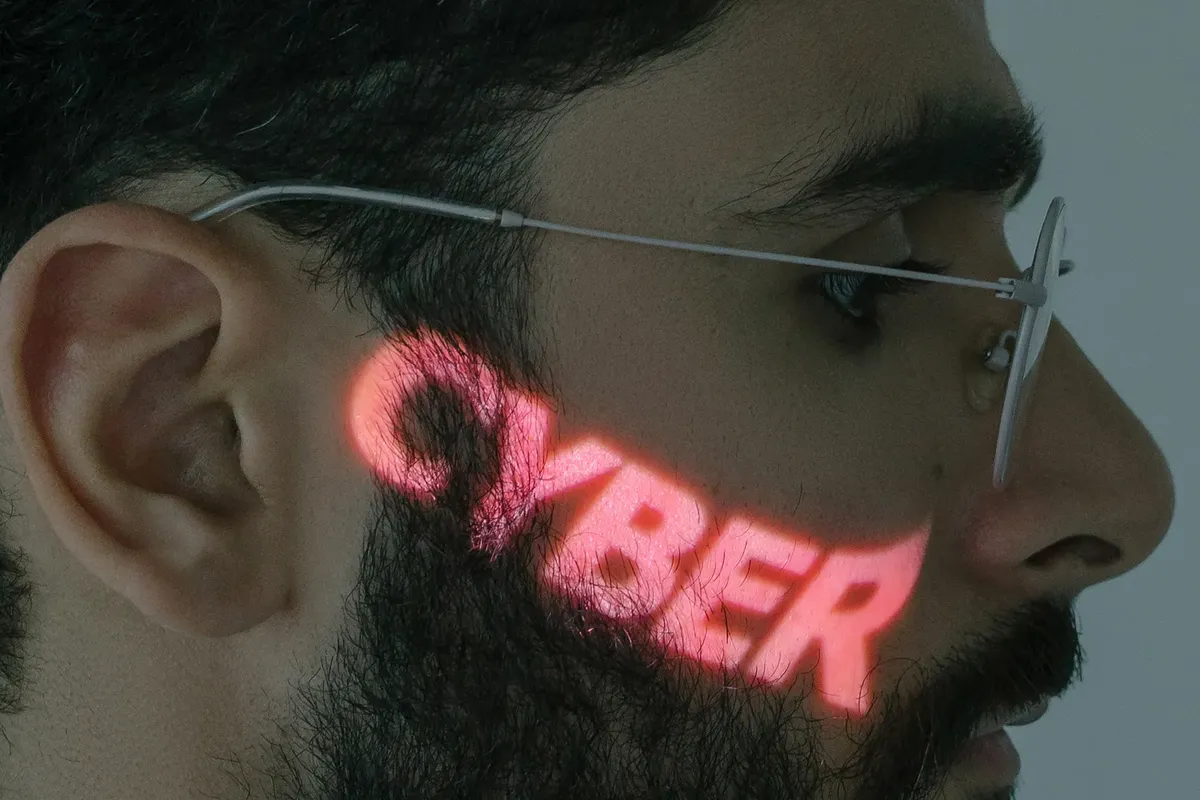
Key takeaways include the importance of long-term federal contracts, the role of dedicated research centers in addressing defense needs, and the expansion of sponsorship to include diverse government bureaus.
How do specialized research centers shape national security?
At midnight in the dimly lit lab, the researcher brushes a hand across the cool metal desk while scanning the flickering cyber data streams.
The National Security Engineering Center addresses national security issues.
A researcher sits at a terminal, analyzing complex data streams to identify emerging vulnerabilities. This work happens within specialized centers designed to handle the most sensitive tasks of a state.
The National Security Engineering Center, which functioned as the C3I Federally Funded Research and Development Center until 2011, addresses national security issues for the Department of Defense. Such institutions provide the technical foundation required for modern defense.
By focusing on specific mission sets, these centers allow experts to solve complex problems that traditional military structures might overlook.
What role does federal funding play in cyber R&D? Israel cyber defense strategy
In the quiet office, the manager sighs deeply while staring at the bright screen of the budget report meant to fuel cyber R&D.

A project manager reviews a budget document, noting the massive scale of resources allocated to long-term digital security. The scale of funding dictates the scope of what a nation can achieve in the digital realm.
According to a report on the Mitre Corporation, MITRE has managed the National Cybersecurity FFRDC since 2014.
This followed the receipt of a "single indefinite-delivery, indefinite-quantity" $5 billion contract from the National Institute of Standards and Technology (NIST) for a research center dedicated to cybersecurity.
This level of investment ensures that the Nation's cyber R&D remains stable over decades. The scale of these contracts allows for the development of cutting-edge tools that protect critical infrastructure.
How does the talent pool expand through government collaboration?
A group of specialists from various bureaus meets in a conference room to synchronize their security protocols. Such collaboration is vital for maintaining a cohesive defense across different sectors of the state.
The evolution of these centers often involves expanding sponsorship to cover a wider array of government functions. Originally sponsored by the Internal Revenue Service, which is a bureau of the Department of the Treasury, the Department of Veterans Affairs joined as a co-sponsor in 2008.
This expansion demonstrates how Securing state with tech involves integrating diverse administrative data protections into a single cohesive strategy.
What are the steps to managing a large-scale cyber research center?
An administrator organizes a series of technical workshops to train the next generation of cybersecurity experts. Managing such a massive operation requires a structured approach to resource and talent management.
- Establish a long-term contract with a dedicated research entity to ensure continuity of mission and funding. 2. Integrate various government bureaus as co-sponsors to broaden the scope of data protection and expertise. 3. Transition historical mission centers into modern engineering hubs to address evolving defense needs.
I observed how these structured transitions allow for a more seamless transfer of knowledge between generations of specialists.
How does the Israeli cyber talent pool compare to traditional models?
A mentor walks through a laboratory, pointing out the specific hardware used in high-level testing. Comparing different models of talent development reveals the importance of specialized, mission-driven training.
| Model Type | Primary Focus | Scale of Investment |
|---|---|---|
| Defense-Centric | National security issues | High-level federal contracts |
| Multi-Bureau | Diverse agency data | Expanding co-sponsorship |

The difference between these models lies in the breadth of the mission. While some focus heavily on the Department of Defense, others incorporate the needs of social and veteran services to build a comprehensive Israeli cyber talent pool.
- How do specialized research centers shape national security?
- What role does federal funding play in cyber R&D?
- How does the talent pool expand through government collaboration?
The subject here is Israel cyber defense strategy.
This part also covers Govt investment in cyber.
This part also covers Cyber security and state.
This part also covers Developing defense skills.
Govt investment in cyber
Related








Comments 0