IoT Era Security: AI Transforms Defense with Network Fabric
"The perimeter is dead; the network itself is the new frontline."
As digital connections expand from laptops to smart lightbulbs and industrial sensors, the old way of building a "wall" around an office no longer works. Today, security must live inside the data moving through the wires and the air.
Key Takeaways
* Network-Centric Security: Defense is shifting from protecting individual devices to securing the entire fabric of the network. * AI as the Brain: Artificial Intelligence is moving beyond simple alerts to predictive modeling and automated, millisecond-level responses. * The Cisco Advantage: By combining decades of networking expertise with AI, the network itself becomes the sensor and the enforcement layer. * Unified Posture: The goal is a single, cohesive defense capable of managing the massive attack surface created by IoT and remote work.

How is the modern attack surface defined by the convergence of Networks and AI?
In the dim glow of a midnight office, a smart thermostat pulses with a frantic light as it transmits data across the silent room.
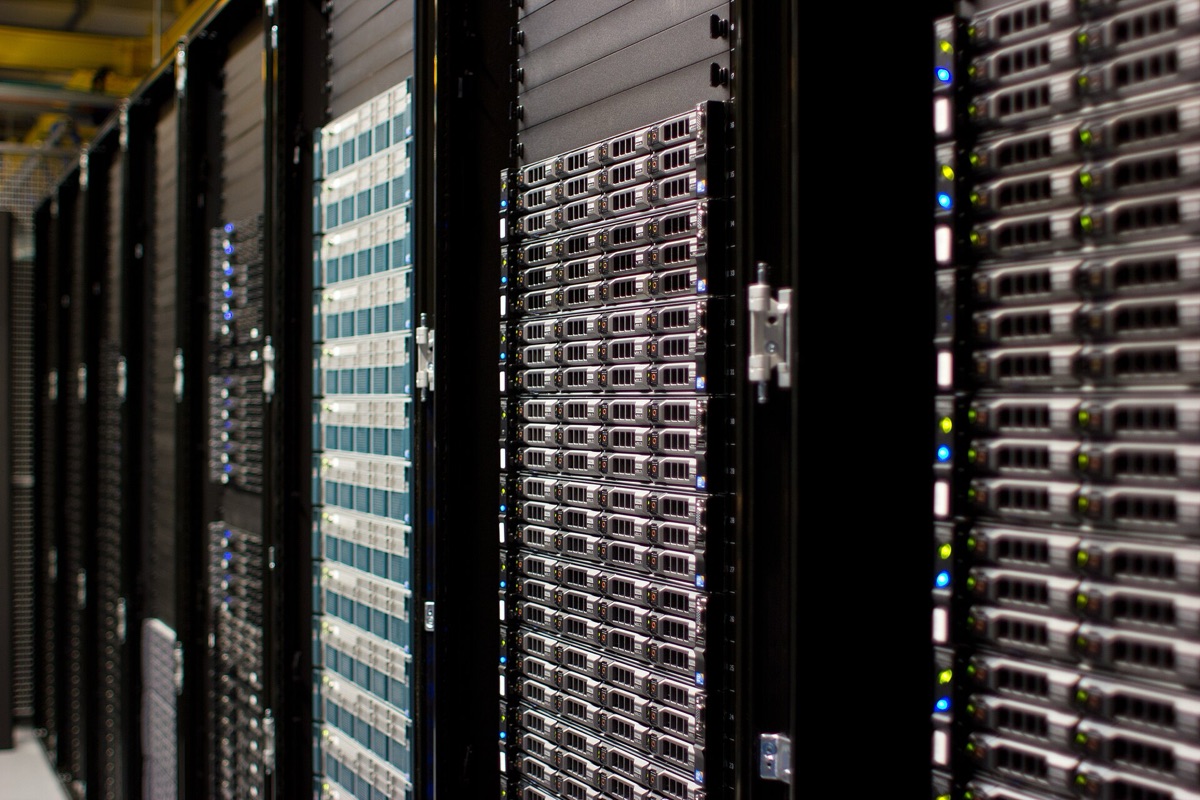
A quiet office at 2 AM, where the only movement is the rhythmic blinking of blue and green LEDs on a server rack. A single smart thermostat, connected to the corporate guest Wi-Fi, begins sending unusual bursts of data to an unknown external IP address.
According to Wikipedia: Cisco, the company established its Globalization Centre East in Bangalore for $1 billion during the mid-2000s.
The modern attack surface is no longer a single gate to be guarded; it is a sprawling, messy web of connections. The rapid rise of the Internet of Things (IoT) means that every smart device—from office cameras to industrial controllers—represents a potential entry point.
These devices often lack the processing power for traditional antivirus software, making them the perfect "back door" for attackers.
Legacy security models relied on the idea of a "trusted" inside and an "untrusted" outside. Once a device passed the perimeter, it was often left to roam freely. However, AI-driven security demands a Zero Trust approach, where every single transaction is verified.
AI allows the system to process massive amounts of data to distinguish between a user doing their job and a piece of malware performing a lateral scan.
This shift moves defense from signature-based detection (looking for known "bad" files) to behavioral anomaly detection (looking for "bad" behavior).
As these connections grow more complex, the question shifts from how to block an intruder to how to manage the sheer volume of data generated by billions of devices.
What specific role does Cisco's foundational Network Technology play in this AI integration?
An engineer sits in a darkened data center, watching a dashboard that visuals millions of data packets flowing through a single switch. The lines of light represent the lifeblood of a global enterprise, moving at speeds that defy human perception.
AI is only as good as the data it consumes. Cisco’s strength lies in its deep, foundational mastery of networking protocols—the rules that govern how data travels.
Because Cisco hardware manages the packet flow, routing, and protocol layers, it provides the high-fidelity, real-time data stream that AI needs to learn effectively.
In this environment, AI is not an afterthought or a software layer "bolted on" to the hardware. Instead, it operates on top of a robust, controllable infrastructure. This allows for advanced techniques like micro-segmentation.
Through network virtualization, AI can dynamically create digital "walls" around specific devices. If a smart printer starts acting like a server, the network can automatically isolate it into a tiny, restricted segment without human intervention.
This level of granular control is impossible for endpoint-only solutions that lack the holistic context of the entire network.
This marriage of hardware-level control and software-level intelligence creates a foundation that is both stable and infinitely adaptable.
How does AI elevate security beyond simple threat detection?
A security analyst wakes up to a notification that an automated system has already quarantined a suspicious device. There is no frantic scramble to find the source; the threat was neutralized before the analyst even finished their first cup of coffee.
The most significant leap in modern security is the move from reactive to predictive defense. Traditional security waits for an attack to happen, triggers an alarm, and then asks a human to fix it. AI changes this by identifying the *precursors* to an attack.
By analyzing subtle shifts in traffic patterns or slight increases in latency, AI can model the likelihood of an impending breach.
This leads to automated orchestration. When a threat is detected, the AI doesn't just send an email; it executes a response. It can isolate a compromised IoT device, change access permissions, or re-route suspicious traffic in milliseconds. Furthermore, AI provides contextual awareness.
It can correlate a strange login attempt on a cloud service with an unusual network scan happening on a local workstation. By connecting these dots, the system sees the full scope of an attack rather than isolated, meaningless events.
| Feature | Traditional Security | AI-Integrated Network Security |
|---|---|---|
| Primary Focus | Perimeter Defense (Firewalls) | Behavioral Defense (Full Network) |
| Response Time | Manual / Human-led | Automated / Millisecond-scale |
| Detection Method | Known Signatures | Anomaly & Predictive Modeling |
| Device Management | Managed Endpoints | IoT, Cloud, and Edge Integration |
| Visibility | Siloed (Device-specific) | Holistic (Network-wide) |
As the scale of digital interaction increases, the ability to act faster than a human can think becomes the only way to stay ahead.

What are the practical steps for securing a hybrid environment?
A remote worker sits in a local coffee shop, their laptop connected to the shop's Wi-Fi. They log into the company's private cloud, bridging the gap between a public space and a secure corporate environment.
Managing security in a world of hybrid work and IoT requires a structured approach. You cannot treat a home office the same way you treat a corporate headquarters, but the security standards must remain equally rigorous.
- Implement Zero Trust Architecture: Never assume a device is safe just because it is connected to your network. Require authentication for every user and every device, every time.
- Segment Your Networks: Use micro-segmentation to separate IoT devices (like smart TVs or sensors) from critical data environments. This prevents an attacker from moving easily through your network.
- Enable Automated Intelligence: Choose security tools that offer automated response capabilities. The goal is to contain threats at the source before they can spread.
- Prioritize Visibility: You cannot secure what you cannot see. Ensure your network tools provide deep visibility into all connected devices, including those that do not have a traditional user interface.
- Regularly Audit and Update: Keep firmware and software updated. In an AI-driven world, the "intelligence" of your defense is only as good as the latest updates to your detection models.
While these steps provide a strong defense, it is important to remember that no single tool is a silver bullet. Security is a process of continuous improvement, not a one-time setup.








Comments 0